Electrical infrastructure for Sydney's expanding Metro
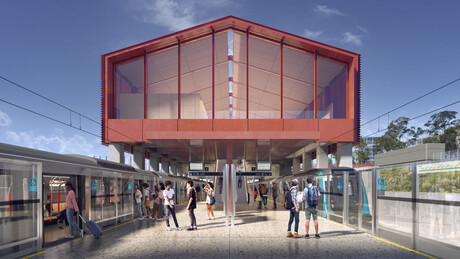
Fuji SMBE Macquarie, an Australian switchboard company that specialises in complex installations, has carried out a difficult project for Parklife Metro consortium, the group that’s building Sydney Metro’s new Western Sydney Airport line.
Described by the NSW Government as “city-shaping” infrastructure, Sydney Metro is Australia’s first fully automated railway and biggest public transport project. The government awarded Parklife Metro consortium (a joint venture that includes Webuild and Siemens) with the Stations, Systems, Trains, Operations and Maintenance (SSTOM) contract for the Sydney Metro–Western Sydney Airport part of the network.
The SSTOM work package includes the delivery of six new stations between St Marys and Bradfield, 12 new metro trains, core rail systems and a stabling and maintenance facility to be built at Orchard Hills.
Parklife Metro engaged Fuji SMBE Macquarie to supply 44 low-voltage switchboards (including main switchboards rated up to 5000A) and associated power systems for the six new stations and their associated administration and maintenance buildings.
Tricky spatial considerations
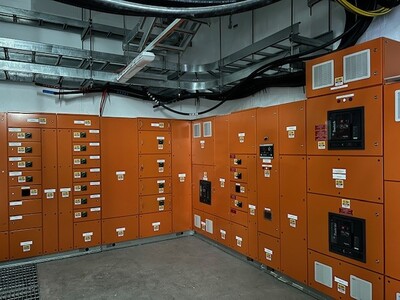
Due to tight architectural footprints and limited switchroom space, the switchboard designs required careful optimisation from the early design stage.
“To work around the limited space, Fuji SMBE Macquarie helped us with back-to-back switchboard designs and unusual L-shaped boards,” said Jason Karakira, Parklife Metro Senior Project Engineer.
“Right from the start, they were accommodating of all our requests and displayed eagerness to complete the job to our satisfaction.”
Once installed, the switchboards needed to seamlessly integrate with building management and control systems (BMCS). Extensive control logic coordination was undertaken during the design phase, with switchboards developed to integrate with station-wide monitoring and control systems.
“This is a detail-intensive process, with lots of extra controls and internal wiring. Using an iterative design process, Fuji SMBE Macquarie worked with us to make sure everything integrated smoothly and worked efficiently,” Karakira said.
Compliance and testing
All switchboards supplied by Fuji SMBE Macquarie were manufactured and assembled in Australia and designed and verified in accordance with AS/NZS 61439.
The company also worked with Parklife Metro to meet a range of other rail-specific standards. Comprehensive factory acceptance testing (FAT) was conducted prior to delivery, including simulation of BMCS control interfaces to verify low-voltage and high-voltage control functionality and system performance.
“Fuji SMBE Macquarie also provided us with onsite commissioning support, assisted us with staged energisation and ensured each system operated as designed before being brought into service,” Karakira said.
Phased delivery
Delivery was staged across multiple live construction sites and aligned with varying site programs. Close coordination with station builders and construction teams meant switchboards were delivered, installed and energised in line with phased construction and commissioning schedules.
“This phased approach meant that we could align with construction programs and optimise subcontractor resources,” Karakira said.
“Throughout this project, Fuji SMBE Macquarie has displayed outstanding technical expertise and service, and a willingness to accommodate customisations and new requests.”
Phone: 02 9733 0600
Milwaukee Tool M18 REDLITHIUM HIGH OUTPUT XC5 batteries
Milwaukee Tool has upgraded its M18 system by enhancing the M18 REDLITHIUM 5.0AH battery.
Legrand INSPYRA switch and socket range
Combining a sleek aesthetic with practical functionality, the range is designed for...
Adept Direct Cable Drum Channels
Built to accommodate cable reels up to 1000 kg in weight and 1000 mm in width, these channels...