Overcoming natural disaster
Tuesday, 09 June, 2026
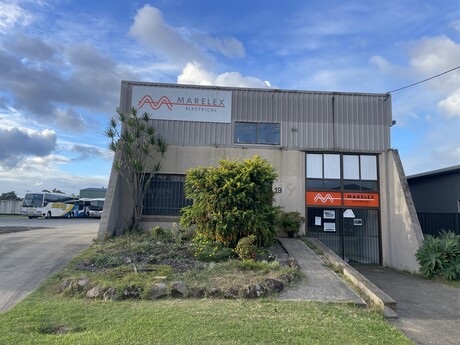
When Australian switchboard manufacturer Marelex Electrical’s factory was hit by the 2022 Lismore floods, Managing Director Brad Harrang faced a mammoth recovery effort.
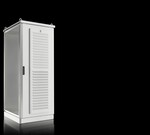
Marelex services much of rural NSW and central Queensland, specialising in projects for councils, government, pump stations and wastewater treatment plants. Since many of the locations it services are close to either rivers or the beach, the company manufactures aluminium switchboards to avoid any issues with rust.
In February 2022, Lismore NSW experienced its highest flood on record, reaching 14.4 m and causing widespread devastation.
Harrang was at home, a few suburbs over from the factory, when the floods first hit — but when the news broke, it was already too late to do anything.
“By the time the warnings came in, the causeways were already flooded over. Hearing the reports of it being above 14 m, I thought to myself, the factory must be underwater,” he said.
Harrang’s home was cut off for a week by landslides in both directions, so even if he had wanted to leave, he couldn’t.
“We were lucky that one of the residents had an excavator that they brought down to clear the landslides — who knows how long we would have been stranded without that?” he said.
“I’m still luckier than some. Those that lived and worked in Lismore lost both their home and their business. I just lost a lot of the business, but I still had my home.”
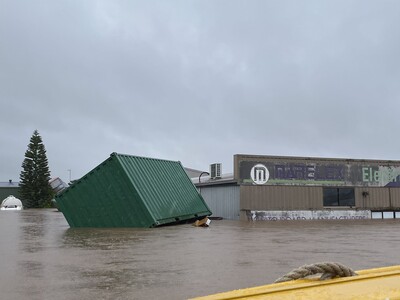
Once he was able to travel back to the factory to survey the damage, Harrang was confronted by a chaotic scene. The facility was so far underwater, it reached the upper level offices. A shipping container full of stock had floated away, becoming lodged over the front gate.
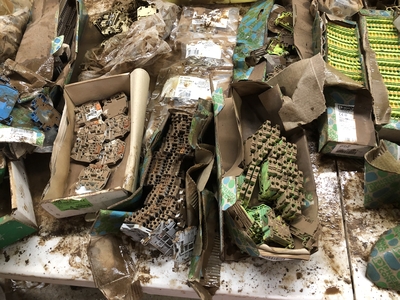
“Everything was waterlogged, muddy and damaged. Just about everything had to be thrown out,” he said.
Some larger machinery, such as the folder, welders and guillotine, could be salvaged, however. Harrang set about pulling it apart, hosing it out, replacing parts (such as relay controls or transformers), leaving it to dry, then putting it back together again.
“We also had to get the shipping container craned off the front fence, but once we cleared it out, it became an effective space to dry items, since it could get quite hot inside a shipping container in February.”
The recovery effort
Rebuilding was a daunting process.
“Everything was caked in mud,” Harrang said. “In the beginning, my wife and I were working 15 hours a day cleaning the factory, but I realised this just wasn’t sustainable. We’d burn out if we kept this up.”
The couple made the decision to put in typical eight-hour days, rather than working round the clock.
“I had to treat it like it was just another workplace, and not a business I owned and ran, or I would have become too emotionally invested, and it would have been too devastating,” Harrang explained.
The shift in attitude made a difference. Within a few weeks, the highways were open again and workers could come back and help, too. Volunteers also helped out, as did the Australian Army a couple of weeks later — Harrang set them to work clearing out the entire upstairs office.
“The community really pulled together,” he said. “The council was focused on the Lismore CBD, so the industrial estate was left largely to manage its own recovery. My staff, friends, family, the volunteers and the army did a phenomenal job, and I don’t know what we would have done without them.”
Disaster leads to a rethink
Once the office had been fully cleared, it was time to assess where the business sat. Prior to the floods, the factory had seven partially built and two complete switchboards on the floor.
“These all had to be stripped out, all switchgear thrown out, and the boards rebuilt. It was hard to accept, but our suppliers helped out enormously, offering us special rates on gear that we had to re-purchase due to the floods,” Harrang said.
“Another major help was the Business Council of NSW who set us up with a flood grant, which meant we could keep paying our staff while we got the business back up and running again.”
Within about six months, Marelex was ready to take on new work again.
“Honestly, I wouldn’t wish it on anyone. I’m the type of person that finds it hard to ask for help, but I really had to this time, or I just wouldn’t have coped,” Harrang said.
“Once we were finally back up and running, I needed a little break, so my wife and I went camping for a couple of days, somewhere high up and with no mud!”
The business revives
The business might have been ready to go, but there was still no power. Due to the extent of the water damage, the local authorities had the overhead powerlines disconnected, and each business had to have a qualified electrician come to certify that their premises were safe to connect to the grid.
“For a little while there, we missed out on a lot of work, while we were using petrol power, and waiting to be reconnected to the grid,” Harrang said.
“But after we connected ourselves back to the grid, we made a lot of main switchboards. With most buildings in the region being damaged in the floods, we had a lot of work coming in, probably two to three years of being absolutely flat out.
“I went from having my worst year on record that year, to immediately having two of my best ever, so that can fix a lot of things.”
A new chapter
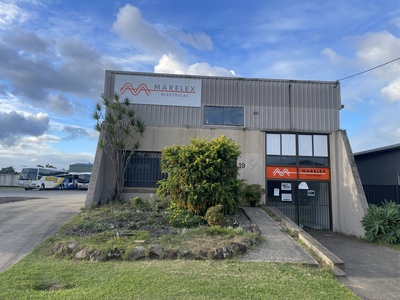
Harrang took the opportunity to invest in the business, while also making sure it was better prepared for future floods.
He bought all-new office furniture with metal legs, not chipboard, so that it wouldn’t warp underwater. He also installed shelving to keep stock upstairs, not on the ground floor, and had a new logo designed.
“About a year later, I hired a new engineer, and he came full of enthusiasm and fresh ideas,” Harrang said. “He encouraged me to put a new sign on the business, to look at certifications, and to join NESMA.”
Harrang then attained ISO 9001 certifications for Quality Management Systems, Environment, and Work Health and Safety.
“Being part of NESMA helped me learn a lot. Their conferences are highly educational, and give good updates on Standards. But for me, the most valuable part of all is the one-on-one conversation you have with people in the same industry.”
Looking to the future of the industry, with the grid decentralising, Harrang said switchboards would be more important than ever.
“Battery, solar, wind… it all needs to connect, and that’s where we — and all of NESMA’s members — are well positioned to be essential suppliers.”
Reducing electrical injuries in Australian workplaces
Monash research has highlighted a need for better electrical hazards training across a range of...
Electrical infrastructure for Sydney's expanding Metro
Fuji SMBE Macquarie has delivered Australian-made switchboards and power infrastructure to six...
Redesigning energy: can the grid adapt to significant change?
Whether you're an electrical worker, renewable energy proponent or data centre operator, this...