Clean Fuel, Reliable Uptime: Diesel Monitoring in Data Centres

Backup generators are installed for the moment when everything else has failed. Yet the diesel fuel on which they depend may remain in storage for months, or even years, between sustained operating events.
During that time, particulate contamination can enter through fuel deliveries, tank breathing, maintenance activities and corrosion within the storage system. Water can also accumulate through condensation or contaminated deliveries, contributing to corrosion, microbiological growth and the formation of sludge.
For a data centre operator, holding sufficient diesel onsite is therefore only part of the resilience equation. The fuel must also remain clean, usable and ready to support the generators when required.
Greater supply uncertainty increases the value of stored fuel
Recent international conflict and disruption to global oil flows have highlighted Australia’s exposure to long and complex fuel supply chains. In response, the Australian Government has taken measures including underwriting additional fuel cargoes and developing larger domestic reserves.
For data centres, these events reinforce the strategic value of the fuel already held onsite. When supply is constrained or uncertain, contaminated diesel cannot necessarily be discarded and replaced quickly or economically.
However, fuel may meet the applicable specification when delivered and still accumulate contamination during transport, transfer and long-term storage. Each movement between a tanker, bulk storage tank, day tank and generator presents another opportunity for particles or water to enter the system.
Fuel security must therefore consider not only the volume available, but its condition.
Why modern diesel engines demand cleaner fuel
Modern high-pressure diesel injection systems have been developed to deliver precise fuel quantities at extreme pressures. Their finely manufactured pumps and injectors operate with very small internal clearances, making them particularly sensitive to contamination.
Fine particles can accelerate abrasive wear within pumps, valves and injectors. Water can reduce lubricity and promote corrosion, while microbiological contamination can produce acidic by-products, sludge and biomass capable of prematurely blocking filters.
The consequences extend beyond component life. An injector that becomes worn, fouled or partially restricted may no longer meter and atomise fuel as designed. Changes to the fuel spray can result in poorer air–fuel mixing, unstable combustion, reduced engine performance and increased fuel consumption.
There can also be an environmental consequence. The industry-developed Worldwide Fuel Charter notes that injector deposits and partial nozzle blockage can affect engine power and emissions. SAE research into diesel injector deposits has similarly associated poor spray patterns and injector malfunction with misfiring, increased fuel consumption and increased emissions.
Maintaining clean fuel therefore supports generator reliability, injection-system life, combustion performance and emissions control.
An established Australian fuel-polishing capability
HYDAC Australia is already a leader in diesel filtration and fuel-polishing systems for the Australian data centre sector.
Through locally engineered and manufactured systems, HYDAC is deploying diesel filtration solutions supporting up to 1 GW of backup-generator installations per year. These systems remove particulate and water contamination from stored diesel, helping protect generators and maintain the fuel as an operational asset.
Fuel polishing is an important part of the solution, but filtration alone does not tell an operator what condition the fuel is in at any given time. Without measurement, it can be difficult to verify whether a polishing cycle has achieved the required result, identify contamination introduced during a delivery, or detect a developing problem within an individual tank.
Traditional laboratory sampling provides valuable detailed analysis, but it represents the condition of a particular sample at a particular moment. The interval between samples can leave changes in fuel cleanliness undetected.
Continuous monitoring closes this information gap.
Measuring cleanliness to ISO 4406
The HYDAC ContaminationSensor Module Economy CSM-E is a compact online condition-monitoring module designed to measure fluid contamination, including diesel stored in fuel reservoirs.
The module incorporates its own motor, gear pump and air-release path to establish a controlled measuring flow. This is important because particle-counting accuracy depends on presenting a representative sample to the sensor under stable conditions and minimising the influence of entrained air.
At the heart of the system is the HYDAC CS1500 ContaminationSensor. It continuously measures solid-particle contamination and expresses the result using established classifications, including ISO 4406.
ISO 4406 represents fluid cleanliness using a three-number code corresponding to the concentrations of particles larger than 4, 6 and 14 micrometres. The system converts particle counts at each threshold into an easily trended cleanliness code.
This provides significantly more information than a simple clean-or-dirty indication. Operators can establish a cleanliness target, observe changes over time and determine whether the fuel is improving, stable or deteriorating.
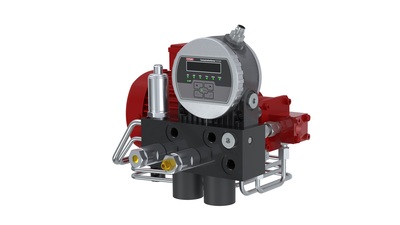
Where additional monitoring is required, the CSM-E can also accommodate an AquaSensor such as the AS3000, adding continuous water-saturation and temperature measurement. This creates the potential for a broader view of stored-fuel condition encompassing both solid contamination and water-related risk.
Turning measurements into operational decisions
A single cleanliness reading provides a snapshot. A trend provides operational insight.
The CS1500 offers configurable cleanliness limits, adaptive measuring cycles, reporting functions and turbidity detection. Depending on the selected configuration, its communication options include Ethernet, Modbus TCP, Modbus RTU, RS485, switching outputs and a 4–20 mA analogue signal.
These interfaces allow cleanliness data and alarms to be incorporated into the generator control system, site monitoring platform or broader maintenance strategy. Operators can then use the information to:
- verify the effectiveness of fuel-polishing cycles;
- detect contamination introduced during refuelling or transfer;
- compare cleanliness across multiple storage tanks;
- identify deteriorating fuel before generator operation is affected;
- initiate filtration based on condition rather than time alone;
- investigate unexpected changes in particle levels; and
- maintain documented evidence of fuel condition.
This shifts diesel maintenance from a largely calendar-based activity towards a condition-based approach. Polishing can be initiated when measured cleanliness moves outside the required range and continued until the target has been restored.
From stored fuel to verified resilience
Backup power reliability depends on more than the generator itself. It depends on every supporting system and diesel fuel is one of the most critical.
Fuel polishing removes contamination. Continuous monitoring verifies the result and provides early warning when conditions begin to change. Together, these capabilities allow operators to move from assuming their stored diesel is ready to having measurable evidence that it is clean.
For data centres, that is the difference between simply storing fuel and managing it as part of a connected, condition-monitored resilience strategy.
Visit hydac.com.au for more information.
Data centres under pressure: the impact of heat in Australia
When data centre uptime is discussed, attention often turns to power redundancy, connectivity or...
WBT's New OFDR Ducting Catalogue — Smarter Ducting Starts Here
Warren & Brown Technologies is proud to unveil the latest Optical Fibre Ducting Raceway...
Cool, Clean and Connected: An Integrated Approach to Data Centre Reliability
As data centres continue to scale in size, power density and complexity, reliability is no longer...