AEMO releases new ISP: industry responds
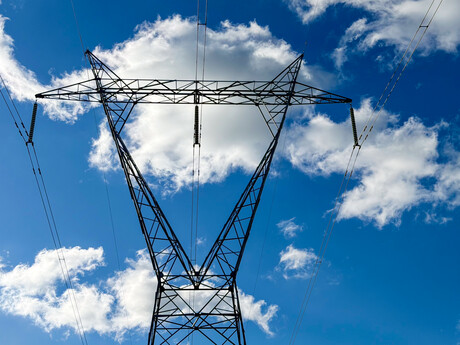
Renewables should underpin Australia’s future grid, connected by transmission and distribution, firmed with storage and backed up by gas.
That’s the verdict of the Australian Energy Market Operator’s (AEMO) most recent Integrated System Plan (ISP), published on 25 June. Laying out the least-cost roadmap for the National Electricity Market over at least the next 20 years, the 2026 ISP has been formed in consultation with about 2000 stakeholders, including consumers and their advocates, industry, investors, network planners and governments.
At its centre is the optimal development path (ODP), which sets out the least costly way to support secure and reliable electricity supply as coal power stations retire and electricity consumption near doubles, while meeting government policy through to 2050.
“The 2026 ISP brings together extensive stakeholder input and models hundreds of system-wide investment combinations against future scenarios, identifying the least-cost path for the National Electricity Market,” said AEMO CEO Daniel Westerman.
“Over the forecast period, Australia’s aging coal-fired power stations will close while electricity consumption is forecast to nearly double. At the same time, consumers are continuing to invest in rooftop solar and home batteries, which benefits all consumers by reducing the need for grid-scale investment.”
For this ISP, AEMO tested about 1000 different combinations of generation, storage, network and consumer investments across three future scenarios, supported by detailed cost–benefit analysis.
Key changes since the 2024 ISP relate to falling solar and battery costs, higher costs for transmission and wind, and stronger growth in consumer energy resources.
Under the ‘Step Change’ scenario — the energy planning scenario AEMO has identified as most likely — the plan involves about $106 billion in annualised capital investment to 2050 (in today’s dollars). Around $6 billion of this is for transmission, which AEMO said would deliver significant benefits, saving consumers $30 billion in avoided capital, operating and fuel costs compared to a pathway without these transmission investments.
“Transmission is a relatively small share of overall system investment but delivers substantial benefits for consumers by unlocking lower-cost energy across the National Electricity Market,” Westerman said.
The ISP tests the robustness of the optimal development path under a range of sensitivities. These include varying levels of consumer energy coordination and energy efficiency; higher demand from industrial loads such as data centres; and constrained delivery of generation and transmission.
In the case of constrained delivery, the ISP sensitivity shows that even if generation, storage and transmission projects are delayed and costlier in the near term, the actionable transmission projects identified in the ODP will continue to deliver significant benefits to consumers. Without them, AEMO said, system costs will rise and reliability risks increase.
“Delivering these transmission projects without delay is critical, as the need and consumer benefits are clear,” Westerman said.
Industry responds
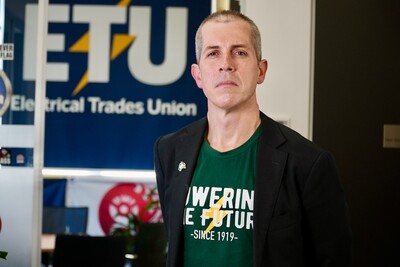
Electrical Trades Union National Secretary Michael Wright welcomed the ISP, but emphasised that efforts would have to be made to provide the electrical workforce needed to make it a reality.
“Our country has made extraordinary progress since 2022, and credit has to go to Albanese and Bowen. This progress is reflected in falling costs for solar and batteries, which mean lower bills for small businesses and households,” Wright said.
“This extraordinary achievement is only possible because we have a skilled, dedicated workforce operating under sensible, high-conviction policy settings. However, serious questions remain as to whether we will have the workers to deliver this ISP,” he continued.
“We need governments and industry to double down and seriously commit to training the 100,000 extra electrical workers Australia will need between now and 2050 to deliver energy transition, build our way out of the housing crisis and capture the benefits of the data centre boom.”
Endeavour Energy also supported the ISP, though the utility’s General Manager Future Grid and Asset Management, Colin Crisafulli, said the ISP had more work to do in integrating distribution-level planning.
“It’s great to see that AEMO is planning the whole national system around the assumption that customers will be active participants, not passive consumers. That’s the future grid we’re building, one that turns millions of solar panels and batteries into a resource that benefits everyone,” Crisafulli said.
The company said the ISP’s focus on $6 billion of transmission investment now needed to be matched by equal attention to the distribution network.
“Our Distribution System Plan is the first time we have worked with peer networks Ausgrid and Essential Energy to deliver a NSW-wide view, with independent, postcode-level modelling,” Crisafulli said.
“It shows smarter use of the existing network could unlock $2 billion to $4.3 billion in value, buy five years of breathing room on major transmission builds, and defer expensive local upgrades by up to 15 years.”
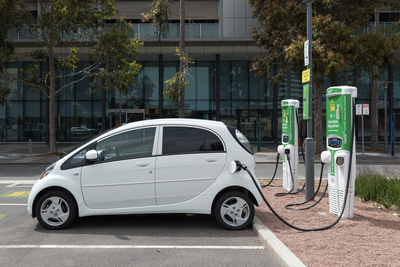
The Electric Vehicle Council was pleased with the ISP’s forecast that EVs will play a key role in Australia’s future energy system, making up about 80% of vehicles on the nation’s roads by 2050 and acting as a consumer energy resource like rooftop solar or home batteries.
“This is about changing how we think and how we do things,” said Electric Vehicle Council CEO Julie Delvecchio.
“The energy system of the future won’t just be built around big coal and gas generators supplying energy via transmission lines. People will be increasingly at the centre of the energy system by driving EVs which are big batteries on wheels.”
Dr Alina Dini, Head of Energy, Infrastructure and Commercial at the Electric Vehicle Council, said AEMO had raised the important question of how much electricity electric vehicles are likely to need.
“The next challenge is understanding what charging infrastructure Australia needs to support that demand,” Dini said.
“While the ISP confirms charging infrastructure will be critical, it leaves open the question of how much charging infrastructure Australia will need, where it should be built, how freight charging networks should develop, or how deployment should be prioritised. That’s exactly why Australia needs a coordinated national outlook for charging.”
Reducing electrical injuries in Australian workplaces
Monash research has highlighted a need for better electrical hazards training across a range of...
Electrical infrastructure for Sydney's expanding Metro
Fuji SMBE Macquarie has delivered Australian-made switchboards and power infrastructure to six...
Redesigning energy: can the grid adapt to significant change?
Whether you're an electrical worker, renewable energy proponent or data centre operator, this...