What's influencing Australian attitudes towards EVs?
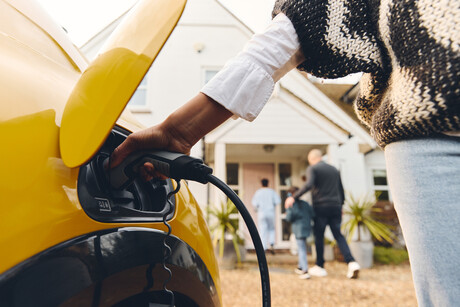
National interest in electric vehicles has surged in recent years, according to NRMA Insurance’s latest ‘Changing Gears’ report,1 which tracks Australians’ attitudes towards EVs.
Since the first survey was conducted in 2024, consideration of owning a battery electric vehicle (BEV) has increased from 20 to 31%, while consideration for plug-in hybrid vehicles (PHEVs) has jumped from 41 to 58%. Only 17% would not consider an EV.
“There’s no doubt 2026 has been the tipping point for EV adoption,” said NRMA Insurance CEO Julie Batch. “More affordable vehicles, expanded charging infrastructure and government incentives have all helped move EVs into the mainstream.
“At the same time, rising petrol prices and concerns about long-term fuel security have given consumers even more reason to consider an EV.”
What prospective buyers wanted now, Batch said, was to be confident that owning an EV would be straightforward and practical.
“Australians want to know they can charge the vehicle where they live, that their battery is safe and will last, and that a local repairer will be able to fix it if something goes wrong.
“Our research shows the barriers to adoption are less about the technology itself and more about the everyday realities of ownership. Addressing those concerns will be critical to helping more Australians make the switch.”
Barriers to adoption
For the 17% surveyed who would not consider an EV, battery health and longevity was their greatest concern (60%), followed by driving range (56%), charging time (54%) and battery fire risk (52%).
Access to charging infrastructure was another sticking point, with nearly half of the ‘EV refusers’ citing a lack of public charging, and 35% saying they were unable to charge at home. A further 26% cited a lack of mechanics who can service EVs as a barrier to purchase.
Batch said the findings suggested many Australians were still relying on outdated perceptions of EV ownership, but their concerns shouldn’t be ignored.
“The challenge is helping Australians separate fact from fiction and to make decisions based on reliable information," she said.
“For example, independent battery testing is already widely available and can provide buyers with a clear picture of a battery’s condition. When it comes to fires, EV battery fires are extremely rare and when charged correctly, there’s virtually zero fire risk.”
Shawn Ticehurst, Head of Automotive Research at NRMA Insurance, said concerns about EV repairs and servicing are often greater than the reality on the ground.
“While 26% of EV non-considerers say a lack of mechanics is a barrier, the industry is rapidly building the skills and training needed to support more EVs on Australian roads,” Ticehurst said.
“As EV ownership grows, so too does the repair and service network. The challenge is making sure consumers are aware that capability is growing alongside adoption.”
1. The report draws on a nationally representative survey of approximately 2000 Australians conducted online by Ipsos on behalf of NRMA Insurance.
Pilot program supports women into electrical careers
'She Means' is an Australian initiative aiming to increase female participation in...
Why Australia's fire safety future needs more women
One of the biggest challenges facing the industry isn't technological: it's human.
Battery energy storage set to rise sixfold by 2030
Electrification, industry and the AI/data centre surge are all driving demand for BESS, with...