Outdoor Electrical Enclosures: Balancing Protection, Thermal Performance and Scalability
Outdoor electrical infrastructure continues to accommodate increasingly sophisticated combinations of power, control, automation and communications equipment. As the equipment within these installations develops, so too do the demands placed on the enclosure system around it.
For larger or higher-density installations, enclosure architecture, thermal management and system configuration are increasingly interconnected, particularly where equipment is distributed across multiple cabinets or internal heat loads require active climate control.
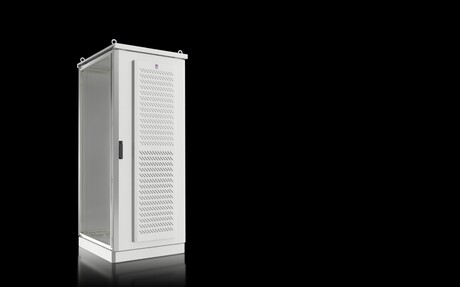
Rittal’s CS Toptec bayable outdoor enclosure provides a system-based approach, combining twin-wall construction, modular baying and integration with climate control within a common outdoor platform.
Using Enclosure Architecture to Manage Thermal Load
For exposed installations, solar loading forms part of the overall thermal calculation alongside the power losses generated by the installed equipment.
CS Toptec uses a twin-wall construction in which the separation between the inner enclosure and external panels creates a chimney effect, reducing the influence of solar radiation. This passive measure can be incorporated into the broader thermal concept, helping to manage external heat input alongside the requirements for active climate control.
Where active climate control is required, selected CS Toptec configurations are prepared for integration with Rittal Blue e+ outdoor cooling units.
This creates the opportunity to consider enclosure construction and climate control as part of the same thermal concept, rather than as separate elements of the installation.
Engineering Around Actual Heat Loads
The relationship between enclosure construction and active cooling becomes particularly relevant in installations containing equipment with high power losses.
In one recent application, limited internal space required multiple high-output frequency inverters and associated control equipment to be installed externally.
A CS Toptec bayable configuration was used to accommodate the equipment, with Rittal RiTherm used to model the thermal requirements of the installation. The calculated equipment losses and operating conditions informed the climate control selection, while the twin-wall enclosure construction reduced the influence of external solar loading.
This allowed the enclosure and climate control solution to be engineered around the actual thermal requirements of the system. The use of standardised enclosure and climate control components also supported the project’s compressed delivery timeframe.
Read more information on this case study here.
A Common Platform for Larger Configurations
The bayable architecture also addresses how larger outdoor electrical systems are configured.
Rather than approaching each cabinet as an independent installation, CS Toptec allows multiple enclosure sections to be combined within a continuous outdoor system. A seamlessly bayable weather canopy maintains the outdoor configuration across the assembly, while the enclosure frame provides Rittal’s 25 mm system pitch and multiple mounting levels internally.
For panel builders and system integrators, this provides a consistent mechanical platform across different cabinet arrangements. Equipment distribution, internal installation and climate control can be developed around the overall system, while retaining flexibility in the individual enclosure configuration.
Standardising around a common enclosure platform can also reduce engineering variation across projects where equipment arrangements or enclosure dimensions differ.
Bringing the System Together
The value of a bayable outdoor enclosure lies in how its individual elements work together.
Twin-wall construction helps manage external thermal influence. Thermal calculation supports climate control selection against actual equipment losses. Bayable architecture provides flexibility for larger configurations, while a consistent internal mounting system supports equipment integration.
Bringing these elements into a common platform provides a structured approach to engineering larger and more complex outdoor electrical installations, while maintaining flexibility across different project requirements.
Rittal’s CS Toptec bayable system combines these capabilities within a modular enclosure platform developed for outdoor electrical infrastructure.
Learn more and download the outdoor enclosure brochure
https://www.rittal.com/au-en/au/LandingPages/Rittal-Outdoor-Solutions-Brochure
[White Paper] Best Practices for Smarter, Scalable Cable Management
In this guide, we explore the key challenges of cable management, best practices to optimise...
Treoflex TA6 and SKINTOP®: Built for Demanding VSD Conditions
In variable speed drive applications, cable performance is about more than simply carrying power...
Reliable Protection for Distributed Infrastructure Environments
Across Australia's infrastructure and utility sectors, enclosure systems are increasingly...