Choosing the Right Cable: CAT6 vs CAT6A
Why Structured Cabling Decisions Matter More Than Ever
In the world of structured cabling, few questions are asked more frequently than whether to install Category 6 (CAT6) or Category 6A (CAT6A) cabling.
At first glance, the decision appears straightforward. Both cable categories support modern Ethernet networks, both are widely available, and both have proven track records in commercial and industrial environments. However, as network demands continue to evolve, the implications of this choice have become far more significant than simply comparing material costs.
For electrical contractors, network designers, consultants and facility managers, structured cabling is no longer viewed as a supporting element of a building’s infrastructure. It has become a critical foundation that enables virtually every connected technology within the modern workplace. Wireless networks, security systems, access control, audiovisual platforms, building automation systems and an ever-growing range of Internet of Things (IoT) devices all depend on the performance and reliability of the underlying cabling infrastructure.
Unlike active equipment such as switches, servers, wireless access points and security cameras — which may be replaced every few years — structured cabling is typically expected to remain in service for ten, fifteen, or even twenty years. Once installed behind walls, above ceilings, or beneath raised floors, replacing cabling can become one of the most expensive and disruptive infrastructure upgrades an organisation can undertake.
As a result, selecting the appropriate cable category is no longer simply a technical specification. It is a strategic infrastructure decision that directly affects performance, scalability, operational costs and future technology adoption.
The question organisations should be asking is not simply:
“What is the lowest-cost option today?”
Rather:
“Which cabling infrastructure will continue to meet our needs over the next decade and beyond?”
The Evolution of Network Infrastructure
Historically, structured cabling systems were designed around relatively predictable workloads. Office environments primarily supported desktop computers, printers, telephones and basic internet connectivity. Gigabit Ethernet represented more than enough bandwidth for most users, and Power over Ethernet (PoE) applications were relatively limited.
In this environment, CAT6 quickly became the preferred standard due to its balance of performance, cost-effectiveness and ease of installation.
Today’s networks bear little resemblance to those environments.
Modern commercial buildings are increasingly dependent on interconnected technologies that place significantly greater demands on network infrastructure. Organisations now expect their networks to support:
- High-density Wi-Fi 6 and Wi-Fi 7 wireless deployments
- High-resolution surveillance and security systems
- Building automation and management platforms
- Intelligent lighting systems
- Digital signage
- Unified communications platforms
- Access control systems
- IoT devices and sensors
- Cloud-based applications and services
- Data-intensive collaboration tools
At the same time, user expectations continue to rise. Employees expect seamless wireless connectivity, real-time collaboration, rapid access to cloud applications, and uninterrupted access to business-critical systems.
These changing requirements have shifted the role of structured cabling from a passive utility to a key enabler of digital transformation.
The infrastructure installed today must be capable of supporting not only current requirements, but also technologies that may not yet have been deployed or fully adopted.
Understanding CAT6
CAT6 has been one of the most successful structured cabling standards ever developed.
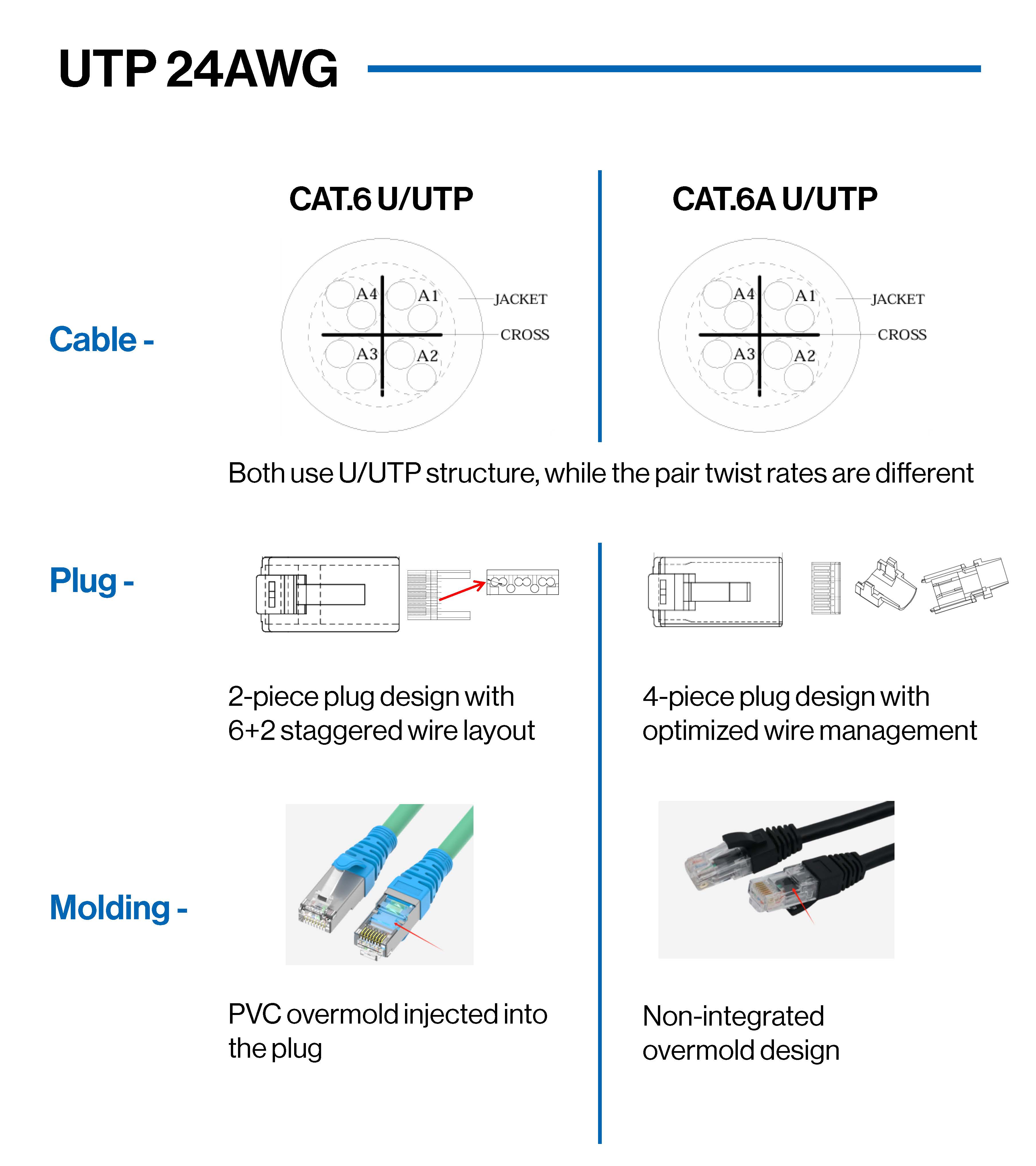
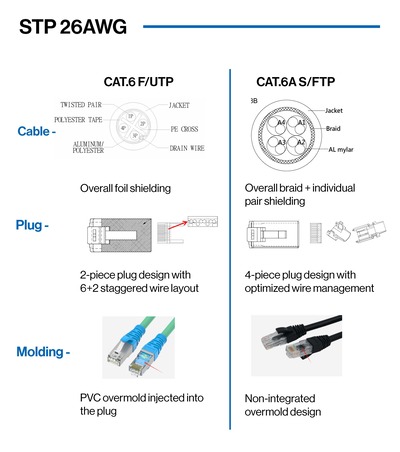
Designed to support frequencies up to 250 MHz, CAT6 provides reliable Gigabit Ethernet performance and can support 10 Gigabit Ethernet under specific conditions and reduced distances.
For many projects, CAT6 remains a practical and effective solution.
Its advantages include:
- Lower material costs
- Smaller cable diameter
- Reduced pathway congestion
- Easier installation in crowded cable trays and conduits
- Faster termination times
- Familiarity among installers and technicians
For environments where network demands are relatively modest, CAT6 continues to deliver excellent performance.
Examples may include:
- Small office environments
- Retail stores
- Light commercial applications
- Basic network edge connections
- Installations with limited PoE requirements
When properly installed and certified, CAT6 is capable of providing years of reliable service.
However, the suitability of CAT6 increasingly depends on understanding its limitations.
Although CAT6 can support 10 Gigabit Ethernet, this capability is generally restricted to shorter distances and ideal installation conditions. As cable bundles become larger and network density increases, external interference between adjacent cables — commonly known as alien crosstalk — can become a significant factor affecting performance.
While a CAT6 installation may comfortably support today’s requirements, there is often less performance headroom available to accommodate future applications.
This distinction becomes increasingly important when infrastructure is expected to remain operational for decades.
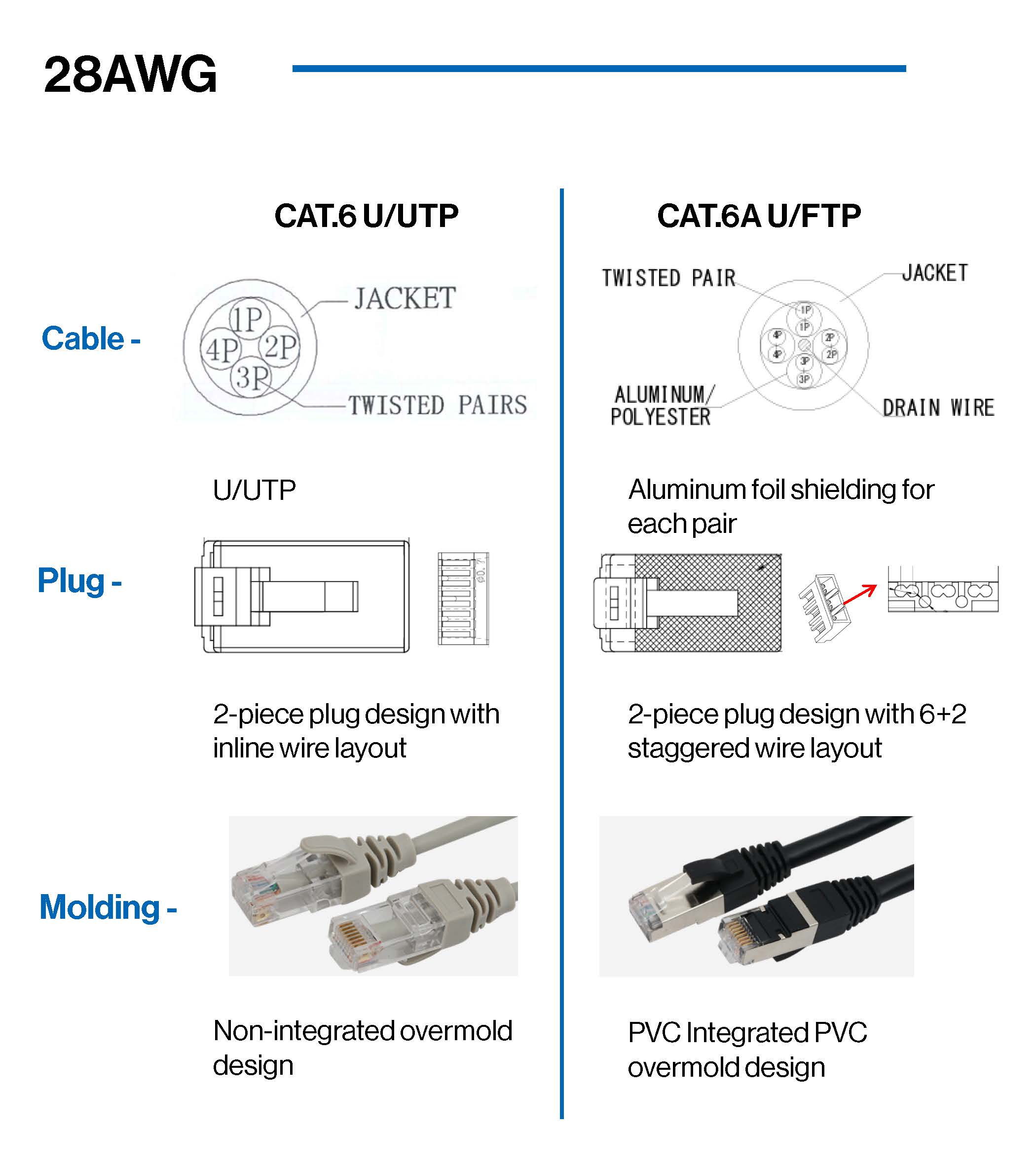
Understanding CAT6A
CAT6A was developed to address many of the limitations associated with earlier copper cabling categories.
The “A” stands for “Augmented,” reflecting the enhanced performance characteristics that distinguish it from standard CAT6.
CAT6A supports frequencies up to 500 MHz — double that of CAT6 — and is specifically designed to support 10 Gigabit Ethernet over the full 100-metre channel specified by international standards.
While this technical improvement is significant, the practical advantages are arguably even more important.
CAT6A offers:
- Guaranteed 10Gbps performance across the full channel length
- Improved resistance to alien crosstalk
- Enhanced signal integrity
- Better support for high-density installations
- Improved thermal performance in PoE environments
- Greater long-term scalability
In real-world installations, these characteristics provide a larger performance margin and greater confidence that the network will continue operating reliably as demands increase.
For contractors and consultants, this often translates into fewer performance-related issues, reduced troubleshooting, and greater confidence in certification outcomes.
As organisations continue investing in digital infrastructure, the value of this additional headroom becomes increasingly apparent.
The Growing Impact of Power over Ethernet
One of the most important developments influencing structured cabling design is the rapid expansion of Power over Ethernet.
PoE has fundamentally changed the way devices are deployed throughout commercial buildings.
Rather than requiring separate power and data connections, many devices now operate using a single Ethernet cable.
Examples include:
- Wireless access points
- Security cameras
- Access control readers
- Intercom systems
- Digital displays
- Occupancy sensors
- Building automation controllers
- Smart lighting systems
As device capabilities have increased, so too have their power requirements.
Modern PoE standards can deliver up to 90 watts of power over copper cabling. While this capability simplifies installation and reduces infrastructure costs, it also introduces new design considerations.
When large numbers of cables carrying significant power are bundled together, heat generation becomes an important factor.
Increased temperatures can affect signal performance and potentially impact long-term reliability.
CAT6A’s larger conductor sizes and improved electrical characteristics make it better suited to managing these conditions, particularly in high-density installations.
As smart building technologies continue to proliferate, PoE performance is expected to become an increasingly important consideration when selecting cabling infrastructure.
Looking Beyond Upfront Cost
One of the most common mistakes made during structured cabling projects is evaluating cable selection solely on initial installation cost.
While budget considerations will always play a role, focusing exclusively on upfront expenditure can lead to significantly higher costs over the life of the infrastructure.
Structured cabling should be evaluated using a Total Cost of Ownership (TCO) approach.
This means considering:
- Expected infrastructure lifespan
- Future network requirements
- Upgrade costs
- Labour expenses
- Business disruption
- Downtime risks
- Maintenance and remediation costs
The reality is that active network equipment will almost certainly be upgraded multiple times during a building’s life.
Switches will be replaced.
Wireless access points will evolve.
Security systems will be upgraded.
New applications will emerge.
The cabling behind the walls, however, is likely to remain unchanged.
If infrastructure limitations force a future cabling replacement project, organisations may face costs that far exceed any savings achieved during the original installation.
This is why many consultants, contractors and asset owners are increasingly viewing CAT6A as a long-term investment rather than a premium upgrade.
The discussion is gradually shifting from whether CAT6A can be justified to whether organisations can justify installing infrastructure that may require earlier replacement.
Where Fibre Fits into the Conversation
Although CAT6A significantly extends the capabilities of copper infrastructure, there are situations where fibre-optic cabling becomes the preferred solution.
Copper cabling remains constrained by a maximum channel length of 100 metres and practical bandwidth limitations.
Fibre addresses these challenges by providing:
- Much greater transmission distances
- Extremely high bandwidth capacity
- Immunity to electromagnetic interference
- Lower signal loss over distance
- Reduced cable size and weight
Typical fibre applications include:
- Building backbones
- Campus interconnections
- Vertical risers
- Data centres
- High-capacity aggregation links
- Industrial environments with high electrical noise
However, fibre does not replace copper entirely.
Because fibre cannot deliver power, copper remains essential for powering edge devices through PoE.
Consequently, most modern networks utilise a hybrid architecture, combining fibre for backbone connectivity with copper cabling at the network edge.
Understanding where each technology provides the greatest value is critical to designing cost-effective and future-ready infrastructure.
Compliance, Standards and Best Practice
Regardless of the cable category selected, adherence to recognised industry standards remains essential.
In Australia, telecommunications cabling installations must comply with ACMA regulatory requirements, including:
- AS/CA S008 – Requirements for customer cabling products
- AS/CA S009 – Installation requirements for customer cabling
Structured cabling systems are also commonly designed in accordance with:
- AS/NZS ISO/IEC 11801
- AS/NZS ISO/IEC 14763.2
- AS 3084
Compliance with these standards helps ensure that installations perform as intended, achieve certification requirements, and provide consistent long-term reliability.
Standards also provide contractors, consultants and clients with a common framework for evaluating performance and quality.
Conclusion
The decision between CAT6 and CAT6A is no longer simply a matter of comparing cable specifications or installation costs.
It is a decision about how an organisation intends to support its digital infrastructure over the long term.
CAT6 remains a highly capable solution for many applications and continues to offer excellent value in environments with modest performance requirements.
CAT6A, however, delivers greater bandwidth, guaranteed 10 Gigabit Ethernet performance over 100 metres, improved resistance to interference, stronger support for modern PoE applications, and significantly more capacity for future technologies.
As organisations continue to invest in smart buildings, high-density wireless networks, connected devices and data-driven operations, the importance of infrastructure headroom becomes increasingly apparent.
Ultimately, the most successful structured cabling projects are not those that simply meet today's requirements. They are the ones that continue delivering reliable performance, adaptability and value for many years after the installation has been completed.
When viewed through that lens, choosing between CAT6 and CAT6A becomes less about cost and more about long-term infrastructure strategy.
Outdoor Electrical Enclosures: Balancing Protection, Thermal Performance and Scalability
As the equipment within outdoor electrical installations develops, so too do the demands placed...
[White Paper] Best Practices for Smarter, Scalable Cable Management
In this guide, we explore the key challenges of cable management, best practices to optimise...
Treoflex TA6 and SKINTOP®: Built for Demanding VSD Conditions
In variable speed drive applications, cable performance is about more than simply carrying power...