Construction ramps up on Project Marinus
Project Marinus, the critical interconnector that will allow Tasmania and Victoria to share electricity and data, is ready to enter its next stage following financial close and the completion of necessary approvals.
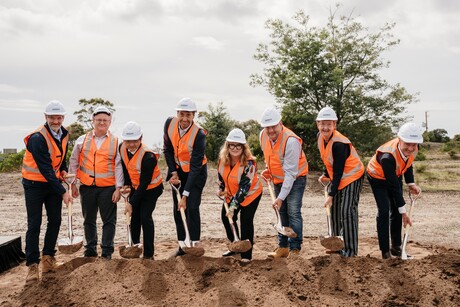
In early October, government, business and community leaders gathered in North West Tasmania for a sod-turning ceremony to mark the project’s achievements to date and celebrate its future.
Project Marinus consists of two parts: Marinus Link, the electricity and telecommunications interconnector between North West Tasmania and Victoria’s Latrobe Valley; and North West Transmission Developments (NWTD), an upgrade of Tasmania’s north-west electricity network that will increase transmission capacity, support renewable energy growth and enable connection to Marinus Link.
“As a two-way interconnector, Marinus Link will allow electricity to flow in either direction, improving flexibility, reliability and resilience across the National Electricity Market, getting the most out of hydropower, wind and solar resources, and bringing on new investment in industry and generation,” said Marinus Link Chair Sandra Gamble.
Gamble said that Marinus Link had mobilised its contractors and was already delivering real benefit to communities in North West Tasmania and across Gippsland.
“Already, some 119 businesses and suppliers have been engaged across Project Marinus — including 59 from North and North West Tasmania,” she said.
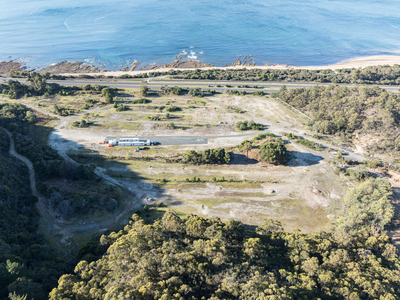
Cable and converter technology manufacturing and construction activities for Marinus Link will continue into 2027, beginning at the Heybridge and Hazelwood North converter stations, the Sandy Point shore crossing, Mardan site compound, and locations along the 90 km underground cable route in Gippsland.
TasNetworks Chair Roger Gill said Stage One of the North West Transmission Developments will cover 130 kilometres and is due in service by 2030.
“TasNetworks is building NWTD for Tasmanians and Australians who want the lowest possible future prices, strong climate action, clean energy careers, and more clean energy for Tasmania and Australia’s future,” he said.
“After years of careful planning, design and preparation, it’s rewarding to see construction begin and this once-in-a-generation project start to take shape on the ground.”
Construction of the NWTD has started between Sheffield and Burnie, including access tracks, fencing, tower foundations and works at the Sheffield Substation.
Tackling bottlenecks in the grid
An Australian research project has received $1.55m in government funding to address this...
US acts to ban Chinese bulk-power equipment
US Executive Order 14420 could test an already stressed supply chain for importers, according to...
Regulator warned of risk to underground energy infrastructure
Before You Dig Australia has urged the Australian Energy Regulator to recognise the risk posed by...