Creating the 'holistic' grid of the future
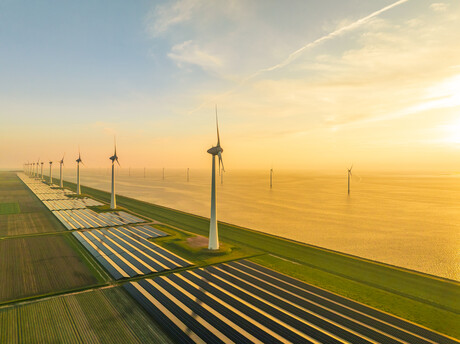
A research team led by Colorado State University has come up with a novel framework for shaping the electric power grid of the future.
The proposed method helps different parts of the grid — transmission and distribution operations — work together to make holistic decisions without requiring system centralisation. The study has been published in Scientific Reports.
The research could assist the energy sector at a challenging time, as power industry leaders and consumers grapple with the impacts of weather-related outages, rising energy costs, and demand driven by population growth.
Increasingly, electricity grids must accommodate renewable energy sources such as wind and solar, in addition to smart technologies. Building these complex grids of the future also opens the door to new risks, such as cybersecurity threats and vulnerabilities to natural disasters like wildfires and hurricanes.
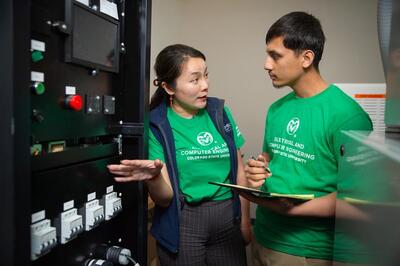
Professor Zongjie Wang, a co-author of the paper, is the director of the new Grid Modernization Initiative at CSU’s Energy Institute and a faculty member in the Department of Electrical and Computer Engineering. Her research findings are part of a broader effort to create smarter, more efficient and reliable power systems to benefit everyone, from utilities to everyday customers.
For decades, the US power grid has operated in silos, meaning utility companies manage electric distribution systems while local and regional operators handle transmission systems, with little coordination between the two.
“As distributed energy resources grow, the traditional separation between transmission and distribution operations becomes increasingly inefficient,” Wang explained. “Industry leaders often lack system-level visibility into how distribution-level resources impact transmission operations.”
The paper details a solution to bridge the gap between distribution and transmission operations.
“As more people adopt solar panels, electric vehicles and other distributed energy resources, we’re pulling together many pieces to simplify these systems and ensure they work together seamlessly,” Wang said.
Drawing on Wang’s background in theoretical optimisation, the new framework shows how reduced distribution network models can be used to combine data from transmission and distribution systems. According to the researchers, this method provides more accurate and operationally feasible dispatch information to electricity providers.
By harnessing AI-powered modelling to account for uncertainties and complexities, the team’s approach enhances situational awareness and streamlines coordination. The holistic framework facilitates the integration of new energy sources while mitigating threats to grid reliability and resilience.
“This work offers a path forward for a big problem many of us are trying to solve,” Wang said. “By improving coordination and reducing inefficiencies, it has the potential to lower system costs, which ultimately flow through to consumers.”
The paper can be read at DOI: 10.1038/s41598-026-39014-4.
Reducing electrical injuries in Australian workplaces
Monash research has highlighted a need for better electrical hazards training across a range of...
Electrical infrastructure for Sydney's expanding Metro
Fuji SMBE Macquarie has delivered Australian-made switchboards and power infrastructure to six...
Redesigning energy: can the grid adapt to significant change?
Whether you're an electrical worker, renewable energy proponent or data centre operator, this...