Renewable energy infrastructure must be built at 'warp speed': report
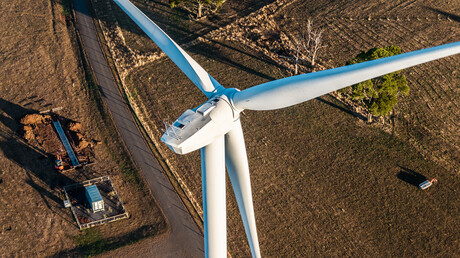
The Centre for Policy Development (CPD) is pushing for a major acceleration of renewable energy infrastructure in Australia in order to meet a projected increase in domestic energy demand and government energy transition targets.
In a recent report, the not-for-profit institute puts forward a package of policy reforms intended to radically speed up infrastructure deployment. The report makes the case for a sixfold increase in the build rate of renewable generation, a fivefold acceleration of transmission, and 10 times the historical (pre-2025) capacity of utility-scale storage. While Australia’s energy transition has made significant progress, there is still a long way to go, CPD said.
CPD CEO Andrew Hudson said the organisation’s position was not just about speed for speed’s sake or meeting targets.
“Recent events have made it clear that the renewable energy transition isn’t just vital for addressing the climate crisis, but an absolute imperative to strengthen Australia’s energy security, build a more resilient economy that can compete in a world rapidly moving away from fossil fuels, and provide certainty to investors and communities alike,” he said.
“Governments across Australia have made substantial improvements recently, but we still need a distinct shift in prioritisation and a coordinated, whole-of-government effort.
“That’s why we’re proposing that National Cabinet adopt a ‘warp speed’ agenda to supercharge the transition.”
CPD Economic Director Toby Phillips warned that there were significant barriers to an infrastructure rollout at the scale and pace required, and called for a whole-system overhaul.
“Despite recent progress, Australia is not on track to meet climate or renewable energy targets,” he said.
“Workforce shortages and supply chain constraints leave developers hamstrung, complex project planning approvals cause lengthy delays, and policy settings are holding back clean energy capital from getting out the door.”
The report includes four key recommendations:
- Doubling the energy workforce pipeline by expanding training infrastructure, improving cross-border labour mobility, and addressing regional labour shortages through vocational training hubs and skilled migration.
- Halving development approval timeframes by using expedited pathways, limiting time and effort for assessments, and standardising assessment requirements. Recent changes to the EPBC Act will speed up environmental approvals, but the separate planning and development processes can still take years.
- Encouraging capital to flow where it is needed most, leveraging public capital to crowd-in private investment for higher-risk, first-mover projects.
- Securing supply of key inputs through national multi-year procurement frameworks and support for the onshore manufacturing of critical grid components.
Phillips said all of these reforms must happen in lockstep. “Even if we completely eliminated barriers in one of these areas, the current speed limit would still apply if constraints in other areas are not addressed.”
He added that the CPD’s approach is not about eliminating regulations and social protections that exist to safeguard communities.
“The energy transition needs to leave Australian communities stronger, not weaker. Our report sets out a responsible pathway to accelerating the economy’s ability to build energy infrastructure.”
The report, ‘Warp Speed: Accelerating renewable energy infrastructure deployment’, can be downloaded here.
Clipsal organises recycling trial for electricians
The Qld pilot provides separate recycling bins for assembled electrical products, switch and...
Funding secured for 1.86 GWh Baranduda Electrical Energy Reserve
The technically advanced BESS will be located next to AusNet's Wodonga Terminal Station in...
Bringing microgrids to Far West NSW
A $3m NSW Govt initiative aims to strengthen energy resilience in the wake of the October 2024...