Vision Systems: Bringing AI and Camera Technology Together
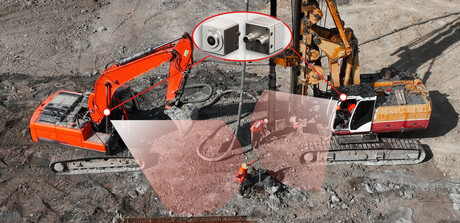
As mobile machinery becomes more advanced, understanding the surrounding environment is increasingly important. From construction and mining to agriculture and industrial operations, machine operators need clear visibility of people, equipment and potential hazards. By combining HYDAC camera technology with TTCONTROL’s FusionAI computing platform, the Vision Systems brings together imaging, artificial intelligence (AI) and machine control to support smarter, safer and more efficient operations.
From images to intelligent detection
Cameras act as the eyes of a machine, providing visual information about its surroundings. However, the real value comes from processing these images and turning them into useful information for operators and machine control systems.
HYDAC offers camera solutions designed for demanding mobile machinery applications. The HVT 1100 features a 1.3-megapixel automotive image sensor, a field of view ranging from 30° to 180°, and a rugged, waterproof design. For applications requiring integrated AI processing, the HVS 1000 combines CPU, GPU and neural processing unit (NPU) capabilities in an all-in-one solution, supporting people, ArUco marker and object detection.
Combined with suitable computing platforms, these technologies provide a foundation for developing customised vision systems that respond to the needs of individual machines and operating environments.
Supporting safety and site awareness
One important application is pedestrian detection. AI models can identify people within a camera’s field of view, helping operators become more aware of their surroundings, particularly where machinery has blind spots.
This capability can also support machinery exclusion-zone monitoring. By defining restricted areas within the camera view, a vision system can identify when a person enters a designated zone and provides an appropriate warning or input to the machine control system. With suitable integration, further applications may include identifying authorised workers through visual markers, monitoring equipment and supporting site-wide operational awareness.
These capabilities can help improve visibility around machinery and provide additional information for operational decisions. Their effectiveness depends on appropriate camera positioning, calibration, detection settings and integration with the overall machine system.
Why verified AI models matter
As AI technology develops rapidly, manufacturers face increasing opportunities to incorporate intelligent features into their machinery. However, adopting AI should be driven by practical requirements rather than technology alone. The key is to select suitable models, configure them correctly and understand their limitations.
Reliable object detection involves more than identifying a person or object in an image. Parameters such as model confidence thresholds determine how certain a prediction must be before it is accepted. Overlap filtering helps manage multiple detections of the same object, while smoothing techniques can reduce the impact of occasional missed detections and support more consistent outputs.
These settings must be carefully selected and validated for the intended application. Factors such as lighting, weather, dust, obstructions and camera positioning can influence detection performance. Models should therefore be assessed under realistic operating conditions to establish their suitability and limitations.
For safety-related applications, AI detection must also be considered as part of the complete machine system. Appropriate risk assessment, system design and validation remain essential, and AI detection alone should not be assumed to provide a safety-rated function.
A system designed around the application
Every machine and customer has different requirements. HYDAC Vision Systems takes a flexible approach built around four key elements: hardware selection, camera calibration, people detection and system integration.
By combining suitable cameras, appropriately verified AI models and customised machine control integration, manufacturers can develop vision solutions that deliver meaningful benefits without unnecessary complexity.
Ultimately, the goal is not to use AI simply because it is available. It is to apply AI where it can provide reliable, measurable value, improving situational awareness, supporting safer machinery operation and helping operators make better-informed decisions.
For more information, please visit www.hydac.com.au.
Flexible cables rise to meet the demands of modern automation
In today’s industrial landscape, manufacturing plants, warehouses and automated facilities...
Why use low-consumption contactors in your motor control systems?
Organizations are under more pressure than ever to improve sustainability metrics. How can you...
Tough and reliable LAPP ETHERLINE PROFINET cables strengthen industrial networks
In modern industrial automation environments, seamless, real-time communication is essential to...