Overhauling fire pumps at a North Sydney skyscraper
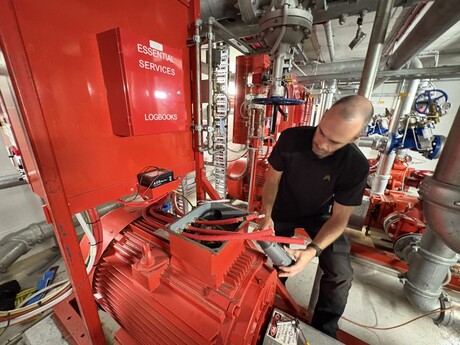
Micron Group designed, engineered, integrated and installed a major fire pump electrical upgrade at 100 Mount Street in North Sydney, reducing measured starting current through the installation of three 250 kW Danfoss variable speed drives.
100 Mount Street, a 35-storey North Sydney skyscraper with a distinctive cross-braced structure, needed a radical overhaul of its fire pump system.
The main problem was that the fire pumps had an extremely high startup current that threatened to place significant strain on the building’s electrical infrastructure in the event of an emergency.
Enter Micron Group, a Sydney-based electrical contractor that specialises in complex building projects. Working with Dexus and Danfoss, the company was engaged to investigate the electrical behaviour of Fire Pumps 1–3 at 100 Mount St and develop a solution capable of significantly reducing the electrical disturbance created during pump startup.
Rather than approaching the works as a conventional VSD installation, Micron Group delivered the project as a complete engineered solution — beginning with detailed power quality analysis and progressing through system design, equipment selection, fire-system integration, installation, programming, commissioning and final performance verification.
Starting with the data
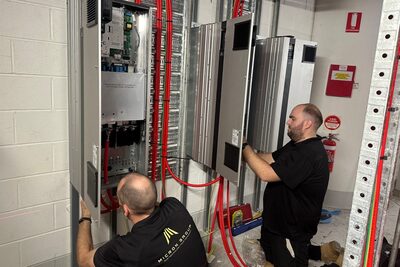
Before developing the solution, Micron Group carried out detailed electrical analysis across the fire pump installation.
The engineering team monitored starting current, voltage behaviour, power quality and harmonic performance to establish exactly how the existing direct-on-line pump starts were interacting with the building’s electrical infrastructure. The investigation confirmed that startup of the large motors was producing current approaching 1500 A.
For a major commercial building, events of this magnitude can introduce significant transient loading into the electrical network and place additional stress on switchgear, cabling, automatic transfer systems and associated protection equipment.
The analysis determined that variable speed drive control could provide a significantly more controlled starting profile while maintaining the required operation of the fire pump system.
Designing a custom solution
Following its investigation, Micron Group engineered a solution based on three 250 kW Danfoss VLT HVAC Drive FC 102 variable speed drives. The Danfoss platform was selected because it suited the motor capacities, electrical requirements and control philosophy of the existing installation.
However, equipment selection represented only one component of the overall project. Micron Group also designed the electrical arrangement, control interfaces, cable infrastructure and integration methodology required to introduce the drives into an existing critical fire protection system.
The engineering process additionally addressed how the new VSDs would communicate and operate with the existing fire control system while maintaining the required system functionality. This required coordination across electrical power, motor control, fire signalling and building infrastructure.
Micron Group essentially acted as electrical designer, system integrator, installer and commissioning contractor, bringing each part of the project together as a single coordinated solution. The works were delivered under the direction of Dexus RFM Edward Zwickl.
Integrating VSDs into critical fire infrastructure
Installing variable speed drives on large fire pump motors requires a different approach from a standard mechanical-services VSD installation. Fire pumps form part of critical life-safety infrastructure, meaning the control strategy and electrical design must be developed around the operational requirements of the fire protection system.
Micron Group engineered the interfaces between the new Danfoss drives and the existing fire control network, ensuring that the required fire signals were correctly incorporated into the new VSD control architecture. The team developed the control logic and operating parameters required for the pumps before programming and commissioning each drive. Particular attention was given to system response during startup and the transition of each pump towards its required operating condition.
By controlling acceleration of the large motors, the VSDs allowed Micron Group to replace the previous high-current starting event with a significantly more controlled electrical profile.
Designing and installing the high-current infrastructure
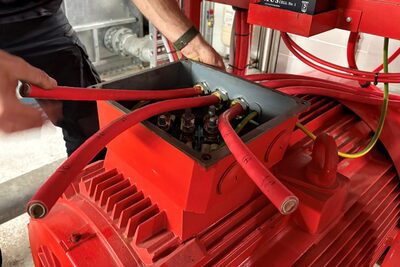
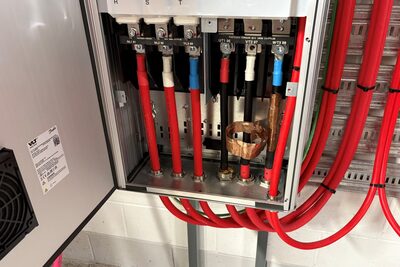
The scale of the project also presented significant physical installation challenges. Three 250 kW drives require substantial power infrastructure, including large cables, purpose-designed support systems and careful consideration of electromagnetic compatibility, mechanical protection and cable routing.
Micron Group designed and installed dedicated support infrastructure for the new system, incorporating heavy-duty galvanised ladder tray and Unistrut systems to safely manage the high-current cabling. The installation included fire-rated and EMC-screened cabling selected to suit the requirements of the application. EzyStrut cable management systems and Firesense-supplied fire-related cabling and components formed part of the completed installation.
Micron Group coordinated the routing, support, segregation and termination of the new cabling between the electrical supply, VSDs, pump motors and associated control systems. This allowed the company to maintain control of the project from the initial engineering assessment through to the final electrical connection and commissioning.
Programming makes the difference
One of the most important stages of the project occurred after the physical installation was completed.
Micron Group’s engineering team progressively commissioned and programmed the Danfoss drives to achieve the required motor acceleration characteristics. The objective was to substantially reduce starting current while still allowing the fire pump motors to reach their required operating condition reliably and consistently.
Drive parameters were refined during commissioning and verified through repeated testing under operating conditions. This combination of electrical analysis, drive programming and field testing allowed Micron Group to tune the system around the actual characteristics of the building and pump installation.
Significant results
Before the upgrade, starting the fire pumps direct-on-line produced measured current approaching 1500 A. Following Micron Group’s VSD installation, integration and programming, measured startup current was limited to no more than approximately 320 A. This represents a reduction of almost 80% in peak starting current.
The improvement significantly changes the way the fire pump motors interact with the building’s electrical network. Instead of imposing a severe instantaneous electrical demand, the motors now accelerate progressively under VSD control.
The controlled starting profile reduces transient loading on the wider electrical distribution system and limits the associated voltage disturbance. It also reduces electrical and mechanical stress on equipment including cabling, switchgear, automatic transfer systems, protection devices and the motor-driven equipment itself. Post-installation testing confirmed stable voltage and harmonic behaviour throughout the programmed starting sequence.
More than a VSD installation
For Micron Group, the 100 Mount Street project demonstrates the value of combining multiple electrical disciplines within a single engineering and delivery team. The project required expertise in power quality analysis, large motor starting, VSD engineering, electrical design, fire-system interfacing, high-current cabling, controls integration and commissioning.
The effectiveness of the solution relied on Micron Group understanding the original electrical problem, designing the complete system around that problem and then verifying the result through measurement. This capability is becoming more important within premium commercial buildings, where individual electrical, mechanical and life-safety systems are increasingly interconnected.
Managing electrical demand on critical equipment
Variable speed drives are frequently associated with energy reduction in HVAC applications, but the primary engineering benefit at 100 Mount Street was the control of large motor starting current.
Fire pumps operate differently from conventional continuously modulating HVAC equipment. In this application, Micron Group’s focus was therefore on managing the electrical impact created when three large motors were required to start.
Reducing the peak current event from approximately 1500 to 320 A provides a more controlled electrical environment and reduces transient stress across the supporting infrastructure. This is particularly important in complex buildings containing standby generation, automatic transfer systems, sensitive electronic equipment and interconnected building services.
The project demonstrates how appropriately engineered VSD technology can form part of a broader power-management strategy rather than simply being considered an energy-efficiency device.
**************************************************
Project at a glance
From original site investigation through to final commissioning, Micron Group’s scope included:
- electrical and power quality analysis
- engineering and system design
- VSD selection and application engineering
- fire-control interface design
- high-current cable and support-system design
- installation of three 250 kW VSDs
- fire and control cabling integration
- programming and control configuration
- testing and commissioning
- final performance verification.
Remote telemetry for Tasmanian irrigation
For large-scale networks like the Don Irrigation Scheme, reliable monitoring is essential....
Passive cooling and the future of HVAC
A rapidly heating planet demands innovative cooling strategies.
The climate risks of future tech
Will large-scale technology developments such as AI-driven systems and electrified homes create a...