Safeguarding LED road luminaires from lightning
Lighting manufacturer Osram has introduced overvoltage protection for LED road luminaires that are vulnerable to lightning strikes, as more cities and local councils around the world upgrade their road lighting to LED.
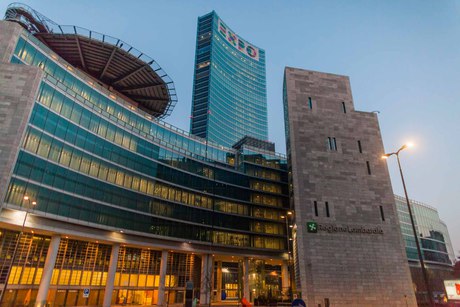
The company has recently completed LED lighting projects in Milan and Turin in a move to cut power costs, which they said is expected to provide at least a 50% reduction in electricity consumption.
However, lightning strikes can cause damage or premature ageing as LED modules are run with lower voltage levels and are therefore susceptible to overvoltage. According to the UN Climate Council’s fifth assessment report (IPCC14), the world has seen an increase in lightning in recent years. Around 10% of the several million lightning strikes that occur each day impact on the ground, thereby causing voltage peaks.
To combat this issue, Osram has introduced the Optotronic 4DIM electronic control units, which feature standard overvoltage protection of 8 kilovolts between mains supply and ground in protection classes I and II, to protect LED modules assembled in road luminaires. This means that lightning can impact to proximities of up to 200 m from a luminaire mast without the LED module being damaged.
Osram said it is the first manufacturer to make the 8-kilovolt protection with an EQUI connection (equipotential) for protection class II applications, enabling various components of the lighting system to exhibit the same electric potential and significantly reduce the occurrence of overvoltage on the LED module.
For more information about overvoltage protection for LED street lighting, click here.
Construction ramps up on Project Marinus
The critical interconnector that will allow Tasmania and Victoria to share electricity and data...
Tackling bottlenecks in the grid
An Australian research project has received $1.55m in government funding to address this...
US acts to ban Chinese bulk-power equipment
US Executive Order 14420 could test an already stressed supply chain for importers, according to...