Solving the connectivity problem for smart apartments
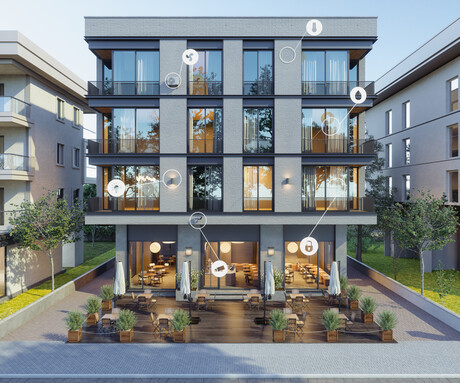
In a new report, the Wireless Broadband Alliance (WBA) has cautioned against the fragmentation of connectivity solutions for multi-dwelling units.
The report, ‘Connectivity Strategies for Smart Multi-Dwelling Units (MDUs): Convergence for Connected Living at Scale’, provides a standards-based blueprint for transforming residential properties into scalable, secure and fully connected smart communities.
“We conceived of this working group as a result of seeing the proliferation of IoT wireless devices, their various stakeholders and use cases in MDU buildings,” said George Hechtman, Project Leader, and Principal at Hechtman Venture Development.
“This can result in a complex mishmash of technologies at odds with each other. We felt that a comprehensive review of these technologies was a necessary first step towards resolving these issues, while providing property owners, service providers and software/hardware vendors with a valuable reference document.”
MDUs are becoming an increasingly common form of dwelling for individuals and families, as evidenced in the 2021 US Census, which recorded that just under 25% of the population lived in complexes consisting of four or more apartments. This expansion, combined with increasing resident expectations and a growing number of managed service providers serving the sector, is driving rapid growth in the MDU connectivity market.
Shipments of Wi-Fi access points to MDUs are forecast to more than double from 1.2 million units in 2025 to 2.6 million by 2030. While Wi-Fi 6 currently dominates deployments, Wi-Fi 7 is expected to overtake it by 2027.1
Given this increasing device density, along with expansion of IoT ecosystems and growing resident expectations, the report recommends fully managed, open-standards-driven architectures as the foundation for delivering scalable, enterprise-grade performance, security and long-term operational value.
Drawing on industry consultation with operators, property owners, technology vendors and service providers, the report addresses the growing fragmentation in MDU connectivity, where proprietary solutions, inconsistent standards and uncoordinated wireless deployments are limiting scalability and reliability. It outlines how convergence across Wi-Fi, IoT and property management systems can shift connectivity from a cost centre into a strategic, revenue-generating asset supporting premium SLA-based services while reducing operational overheads. For consumers, convergence should improve performance and reliability, and enable features such seamless onboarding and home automation.
The report includes the following recommendations for optimising Wi-Fi, IoT integration and building management systems:
Unified, scalable connectivity is foundational to smart living at scale
Fragmented networks cannot support the density, mobility and automation demands of modern MDUs. Fully managed, standards-based Wi-Fi architectures are essential to provide the reliability needed in these high-density environments.
Open standards are critical to interoperability and long-term viability
Standards-based architectures reduce complexity, prevent vendor lock-in and enable ecosystem scale. Open standards such as EasyMesh, USP/TR-369, TR-181, MoCA/G.hn and OpenRoaming play a key role in reducing fragmentation and ensuring long-term network viability.
Fully managed Wi-Fi is required for enterprise-grade performance in MDUs
Unmanaged and quasi-managed models fail to deliver consistent performance, security and tenant isolation for their data and connections. A fully managed Wi-Fi network, coupled with a bulk-billing ISP arrangement, is the only sustainable approach for dense residential environments, ensuring high performance and seamless connectivity across all units.
IoT convergence transforms MDUs into experience-driven smart communities
Integrated IoT elevates buildings beyond basic connectivity to deliver automation, safety and operational intelligence and enhanced tenant experiences. A seamless integration of IoT, building systems and connectivity under a unified managed architecture makes this possible.
Multi-Admin is a defining requirement for MDU connectivity
Secure, role-based access is essential to support owners, operators, MSPs, contractors and residents on shared infrastructure. Multi-Admin capabilities are necessary to ensure effective management while maintaining privacy and security across all users and devices. Several critical opportunities and gaps are identified, including the applicability of the Connectivity Standards Alliance’s Matter protocol as potentially a key element.
New technologies and transitional challenges
The report examines the significant new opportunities presented by next-generation technologies such as Wi-Fi 7, 6 GHz spectrum, WPA3 and emerging IoT frameworks — but cautions that these will also introduce real-world deployment and operational challenges at scale, such as WPA3 migration risks in large-scale residential deployments and the operational impact of device compatibility.
It explores the need for unified, scalable connectivity to support connected living; the critical role of open standards in enabling interoperability and avoiding vendor lock-in; and the importance of fully managed Wi-Fi, underpinned by wired backhaul, to deliver predictable performance and strong tenant isolation in high-density residential environments.
Tiago Rodrigues, President and CEO of the Wireless Broadband Alliance, said that connected living at scale represented a strategic opportunity for the MDU and residential sector, but only if connectivity infrastructure is centralised in an orchestrated way, rather than as an afterthought.
“For residents, this means reliable, seamless digital experiences across their homes and shared spaces. For owners and operators, it means predictable performance, operational efficiency, investment optimisation and the ability to introduce new, differentiated services with long-term value,” he said.
The ‘Connectivity Strategies for Smart Multi-Dwelling Units (MDUs): Convergence for Connected Living at Scale’ report is available to download at https://wballiance.com/connectivity-strategies-for-smart-mdus.
Building on its findings, WBA is inviting operators, property owners, managed service providers, and technology vendors to participate in the next phase, which commenced in Q1 2026. This phase will focus on developing the MDU Smart Living Technical Blueprint, delivering industry-aligned architectures, validated deployment models and practical guidance to accelerate commercial adoption. Interested parties can register an interest in the next phase of the project at https://wballiance.com/engage-with-wba/.
1. ABI Research: Wi-Fi Access Point Shipments to the MDU Vertical World Markets, Forecast: 2024 to 2030.
Towards flexible data centres
Can data centres be transformed from static loads into dynamic, grid-aware assets?
Sustainable cloud in Australia: cutting carbon without cutting performance
How can we scale digital infrastructure without proportionally increasing its environmental impact?
Is data centre development outpacing the grid?
A new report from Wood Mackenzie identifies a concerning disparity between data centre...