Taking energy training to the regions
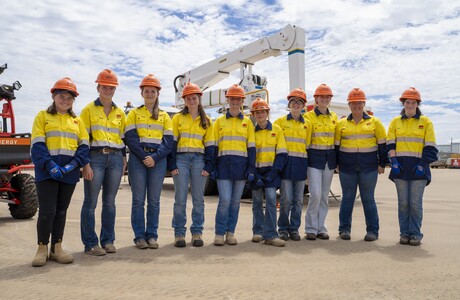
With an eye to creating the energy workforce of the future, Essential Energy is partnering with the NSW Government to bring practical work experience to students across regional communities.
The training will be facilitated through the NSW Government’s Regional Industry Education Partnerships (RIEP) program, which works with employers and schools across NSW to connect students with industries, helping them better understand career pathways, training options and the skills required for future jobs in regional communities.
It’s not the first time Essential Energy has worked with RIEP, having hosted 24 events via the program in 2025. With the energy sector looking to fill a shortfall of 42,000 trades roles across Australia by 2030, the utility is committed to further boosting engagement with students in 2026.
Essential Energy Chief Executive Officer John Cleland said the industry needs to do everything it can to promote itself to the next generation of energy workers.
“To create that pipeline of prospective tradespeople, we need good programs such as RIEP to give young people, and women in particular, a feel for the careers they can pursue so they understand that the energy transition is delivering economic benefits to regional Australians,” he said.
To fill the specialised roles required in an increasingly complex industry, the utility has also created the Essential Energy Training Academy, which launches later this year.
“We have had a very successful apprenticeship program for years, but the skills shortage is so large that we started the Essential Energy Training Academy to help grow the broader industry — training people from outside our organisation,” Cleland said.
“The Essential Energy Training Academy is partnering with industry stakeholders keen to build the skills capabilities needed to drive the energy transition and meet growing workforce demand.”
RIEP Regional Manager Fiona Forrester said the Essential Energy Training Academy’s footprint across six sites in regional NSW would significantly expand access to training and career pathways for young people.
“Having campuses located across regional communities means more students can see what a future in the energy sector looks like while staying close to home, so we’re quite keen to work closely with the Training Academy to reach more young people,” Forrester said.
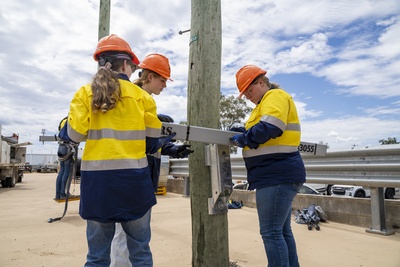
Essential Energy hosted a RIEP NextGen Women in Trades event at its Dubbo depot in February, giving 10 secondary school students exposure to trade roles and a clear view of career pathways in the energy industry.
The Year 9 and 10 students from Coolah Central School, 135 km north-east of Dubbo, spent an afternoon at the depot, hearing from skilled tradespeople before trying some of the jobs themselves.
“It has really given me a look into the energy industry. I’ve learnt so much and I’m very keen on it,” said student Lily Richard.
“This has really opened my mind. I got to experience what it was like to climb a (power) pole. I’ve really enjoyed it.”
Cleland said diversity was vital to creating a stronger, more sustainable energy workforce.
“Exposure and visibility drive possibility — when we show women the fulfilling and varied careers available in the energy sector, young people like those I met in Dubbo can see what’s possible for their future,” he said.
“I am proud that Essential Energy is an industry leader in diversity, and women are increasingly entering our industry. Programs such as the NextGen Women in Trades program are vital to showing them early in their lives that they are not only welcome, but their skills are needed.”
$70K fine for solar installer
A Victorian electrical company has been convicted and fined for failing to implement fall...
Worker injured in powerline incident
A Victorian crane company has been fined after one of its workers was severely burned when a...
Aust solar-sharing tech wins top design prize
SolShare, a rooftop solar technology developed by Melbourne company Allume Energy, has won the...