Industry groups urge government to act on EV policy
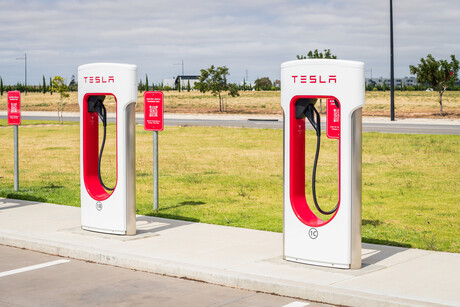
A coalition of electrical, energy and EV industry bodies is calling on all levels of government to support greater EV adoption through adjustments to current policy.
The group, which consists of Evie, EVX, Energy Australia, AGL, Smart Energy Council, NECA, Australian Energy Council, Nexa Advisory, Clean Energy Council, Flow Power, Tech Council of Australia, EVSE, Jolt, Amber and Tesla, has stated that under the right policy settings, the private sector is ready to deploy billions of dollars of cumulative investment by 2030 to expand Australia’s charging network at speed and scale, and create the skilled jobs needed to build and maintain it.
In order to achieve this, Australia needs a clearly defined partnership between government, regulators, networks and industry, the group said.
The group has recommended that state, federal and territory governments follow the lead of the Victorian Government in explicitly committing to removing barriers so the competitive market can deliver. It also praised the NSW Government’s recently announced EV Strategy as a welcome initial step.
In its capacity as a coalition of charging operators and service providers, the group has committed to investing at scale in public charging infrastructure across metropolitan, suburban, regional and highway locations, with a focus on reliable, accessible and affordable services. It has also pledged to work with governments, local councils, communities and industry on site identification and deployment.
Other commitments include building a competitive market, supporting open access and interoperability, and partnering in good faith with government and regulators to enable a coordinated approach across government, local councils and industry.
To facilitate this, the group is calling on energy regulators and all levels of government to provide policy certainty and protect competition; enable a coordinated, partnership-led rollout of EV charging infrastructure; and fix grid connection bottlenecks. It has also asked for tariffs and technical settings to be reformed, and for the removal of regulatory barriers to large-scale private investment in EV charging infrastructure, thus enabling a competitive market.
“Right now, the biggest barrier to rolling out EV charging at scale isn’t demand or technology — it’s the basic plumbing of the system,” said David McElrea, Chief Advocacy Officer at the Smart Energy Council.
“We’re seeing wildly inconsistent connection costs and delays of up to two years, which is holding back investment that’s ready to go. If we fix connections, tariffs and pricing signals, private capital will do the heavy lifting — delivering charging faster and at lower cost to taxpayers and energy consumers.”
AEMC supports Commonwealth's $40m EV charging program
A new draft rule from the Australian Energy Market Commission should pave the way for increased...
What's on at Comms Connect Melbourne?
Taking place on 14–15 Oct, the major conference and expo for critical communications...
Electrician fined for licence breach
A Perth electrical worker has been fined $4500 for posing as an electrical contractor.