Renewables and storage provide lowest-cost energy future
Renewable energy supported by storage is helping to protect Australia against global energy shocks and continues to provide the lowest-cost pathway for Australia’s electricity system to achieve net zero emissions.
This is the finding of the latest annual GenCost report, compiled by CSIRO and the Australian Energy Market Operator (AEMO), which assesses the costs of new-build electricity generation, storage and hydrogen technologies.
Now in its eighth year, GenCost provides a thorough annual assessment of the costs of new-build electricity generation, storage and hydrogen technologies in Australia.
Dr Dietmar Tourbier, CSIRO Director of Energy, said that consultation remained central to GenCost, ensuring the report reflects diverse perspectives and the best available evidence to support transparent decision-making across the energy sector.
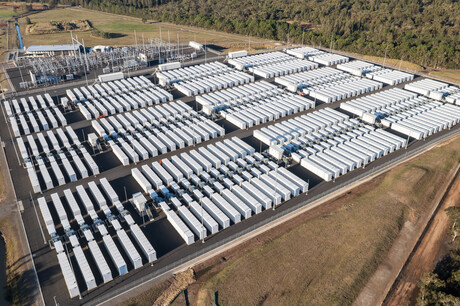
A key report finding was that battery storage is playing an increasingly important role in Australia’s electricity market. As batteries grow in capacity and lower in cost, they are beginning to compete with traditional gas peaking generation, contributing to lower peak evening electricity prices in the short term.
However, while battery technologies are delivering cost reductions, a rising demand for gas turbines to power US data centres is increasing costs for gas-based technologies.
Overall, renewables supported by storage remain the lowest-cost generation investments for Australia’s future electricity system to achieve net zero, with solar PV and onshore wind projected to supply 93% of electricity by 2050.
By 2050, all new electricity generation technologies are projected to cost more than $100/MWh — a cost influenced by the replacement of aging assets across the system.
CSIRO Chief Energy Economist and GenCost Project Leader Paul Graham said understanding how global events and technology markets influence electricity generation capital costs is a key part of GenCost’s role.
“As battery costs continue to fall and gas technology costs rise, batteries are increasingly becoming the preferred flexible generation technology in the near term,” Graham said.
“However, GenCost modelling finds gas technologies will still play a limited but important role in helping firm the electricity system, contributing around 3–7% of generation by 2050.”
While some non-renewable technologies, such as new black coal, are potentially cost-competitive with renewables, their use would require higher-cost carbon abatement elsewhere in the economy to achieve Australia’s net-zero goals, the report found.
For more information, visit: GenCost: cost of building Australia’s future electricity needs.
$70K fine for solar installer
A Victorian electrical company has been convicted and fined for failing to implement fall...
Worker injured in powerline incident
A Victorian crane company has been fined after one of its workers was severely burned when a...
Aust solar-sharing tech wins top design prize
SolShare, a rooftop solar technology developed by Melbourne company Allume Energy, has won the...