Efficient HVAC protects Aussie hospital during bushfires
Maintaining excellent air quality in a hospital during bushfire season is a challenge — especially if the aim is to also reduce energy consumption. Impressively, this is what a recent hospital trial in northern Victoria has achieved.
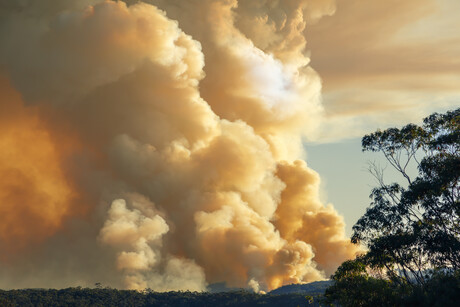
The project, ‘Sustainable Solutions for Pandemic and Bushfire Resilience in Healthcare Facilities’, was conducted at Echuca Regional Health during the January 2026 bushfires, when smoke persisted across the region for several days and outdoor air quality deteriorated sharply.
Led by Adelaide University researchers in partnership with Echuca Regional Health and Australian clean-tech company Plasma Shield Ltd, with funding from the Victorian Health Building Authority and industry research centre RACE for 2030, the trial resulted in pandemic-mode air quality along with a 34% energy saving for the hospital.
“This project shows we can reduce hospital energy use while protecting indoor air quality, all with Australian made technology that remains robust through bushfire events,” said Tosh Szatow, Business Innovation & Policy Lead at RACE for 2030.
“That is a critical insight for urban and regional hospitals facing rising energy costs and more frequent smoke threat through summer.”
The energy impact
For pandemic mode, hospitals typically rely on high volumes of outdoor air to manage infection risk. However, this approach can significantly increase fan energy and cooling demand, particularly during extreme weather events.
The researchers set up two side-by-side air handling units so that they could compare the performance of a regular unit with an alternative system that used advanced air filtration. Energy modelling based on this data showed that the alternative system — operating with reduced outdoor air supported by a bioHEPA air treatment medical device — used 34% less total energy than a full outdoor-air operation.
The reduction was largely driven by lower fan power and reduced heating demand.
“Traditionally, building operators have faced a trade-off between energy consumption and indoor air quality,” said the project’s Chief Investigator, Dr Tim Lau from Adelaide University’s School of Electrical and Mechanical Engineering.
“Early findings from this project indicate that advanced air filtration systems can improve air quality while also lowering the energy requirements of air conditioning systems.”
Air quality findings
The energy savings did not lower the air quality — instead, the number of particles in each cubic metre of supply air reduced from a peak of 4.4 million to less than 5000.
Echuca Regional Health CEO Carol-Anne Lever said the hospital was delighted to be involved in such an innovative project.
“As a regional health service, we understand the challenges and importance of air quality for maintaining safe and comfortable environments for patients and staff,” she said.
“This research helps demonstrate how hospitals can adapt ventilation strategies to protect indoor air quality while also reducing energy use.”
Bushfire smoke and hospitals
Given Echuca Regional Health often deals with the impact of bushfire smoke, it was encouraging that the project’s air quality and energy results were maintained during the January 2026 bushfires in the region.
During the bushfire smoke period, particle levels in incoming outdoor air increased by up to 30-fold. Despite this, air supplied to the hospital ward using the alternative system remained consistently clean. In fact, the findings noted a 1000x drop in the level of contaminants via bioHEPA, compared with other wards using conventional filtration approaches.
Professor Dino Pisaniello from Adelaide University’s School of Public Health said the real-world context strengthened the findings.
“What makes these results compelling is that performance was measured during a prolonged bushfire smoke event in an operating hospital, not under laboratory conditions. That provides confidence in how these systems perform when they are most needed.”
Ben Gill, CEO of Plasma Shield, the Australian company that designs and manufactures the bioHEPA device used in the trial, said the findings point to opportunities for a rethink of ventilation strategy.
“We now know that any hospital in Australia can make any patient ward a pandemic-proof space, without increasing their energy burden. That is a vital tool for healthcare designers and practitioners.”
Future applications
Although this trial is being conducted in a healthcare setting, the researchers said the underlying challenge — maintaining safe indoor air while reducing reliance on energy-intensive outdoor air — is increasingly relevant to other building types, such as commercial offices, schools and public facilities.
Energy and air quality monitoring will continue at the hospital throughout 2026.
Overhauling fire pumps at a North Sydney skyscraper
Micron Group carried out a major fire pump electrical upgrade at 100 Mount St, reducing measured...
Remote telemetry for Tasmanian irrigation
For large-scale networks like the Don Irrigation Scheme, reliable monitoring is essential....
Passive cooling and the future of HVAC
A rapidly heating planet demands innovative cooling strategies.